Schultz Music Publications, which began in 1996, is the primary publishing outlet for the original works of American composer, arranger, Robert Schultz. The website, schultzmusic.com, was created and launched in 2001 to function primarily as an accurate and up to date source of information for the complete catalog of Robert Schultz music, including not only the original works released by Schultz Music Publications, but the broad catalog of Schultz editions published by various American music publishers.

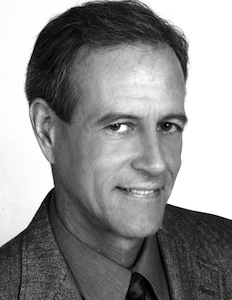 Robert Schultz, American composer, arranger and editor, has achieved international fame during his career in the music publishing industry. The Robert Schultz Piano Library, established in 1980, has included more than 500 publications of classical works, popular arrangements, and Schultz’s original compositions in editions for pianists at every level from beginner to concert artist. In addition to this extensive library of published piano works, Schultz’s output includes original orchestral works, choral and vocal works, chamber music and works for solo instruments.
Born in 1948, Schultz grew up in Uniontown, Pennsylvania where his music training began with piano teacher Katherine Keighley. In addition to his piano studies Schultz was an active athlete involved in track, cross-country and was a member of the state champion basketball team. He also became an avid fly fisherman, spending time trout-fishing in the limestone streams of western Pennsylvania. Following high school, Schultz enlisted in the navy where he received training as an Anti-Submarine Warfare Technician and was assigned to VP-23, a patrol squadron based in Brunswick, Maine. As an air-crewman, Schultz made deployments to Iceland, Spain, the Azores, Sicily and Crete. During his time in the navy Schultz’s love of music, especially the piano, continued to grow. With no opportunity for formal music study readily available, Schultz spent much of his off-duty time practicing and composing on whatever piano could be found on the base where he was stationed.
In 1971, Schultz entered the College of Creative Arts at West Virginia University, where he later would graduate magna cum laude, earning a Bachelor of Music Degree in Theory/Composition, and a Master of Music Degree in Composition under the tutelage of composer Thomas Canning. Schultz applied himself as a serious composer from the beginning of his study with Canning, creating a number of works that were later published and continue to be performed around the world today. He composed and arranged for many of WVU’s performing ensembles, and wrote the incidental music for productions of The Seagull and Long Day’s Journey Into Night. Schultz also wrote original music for his own piano students, compositions which would later be published in his Future Artists Series.
Schultz was equally serious about his piano studies during his years at WVU, studying with James Miltenberger and Herman Godes. He maintained an active piano teaching schedule, teaching in the Preparatory Department, the summer Fine Arts Camp, and as a graduate teaching assistant teaching both private and group piano. Schultz was an active accompanist as well as the pianist for the WVU Jazz Band and the highly-acclaimed Percussion Ensemble under the direction of Phillip Faini. Schultz also developed a keen and lasting interest in piano technology, which he studied with master-technician Dean Shank. Schultz recalls his years at WVU as an extraordinary educational experience, crediting his study and participation in a wide range of music disciplines as the foundation for the diversity of his library of publications.
In 1978 Schultz moved to Miami, Florida to begin work for Columbia Pictures Publications as an arranger. Within one year Schultz was promoted to Senior Keyboard Editor and also became the featured piano writer for the publisher. The earliest editions of his published works included the Future Artists Series, piano transcriptions of orchestral works, arrangements of popular music, and Schultz editions of standard classical piano pieces–all of which became the basis for The Robert Schultz Piano Library. During the next 25 years, Schultz would write more than 3,000 works for this library published within the catalogs of Belwin Mills, Columbia Pictures Publications, CPP/Belwin, The FJH Music Company, Warner Bros. Publications, and Alfred Music Publishing Co.
In 1990 Schultz left the senior editor position to devote his full attention to composing and arranging from his studio. In 1997 Schultz married Tina Faigen, his business partner, collaborator, editor and interpreter of his concert piano works. Together they launched Schultz Music Publications, co-authored the Accelerando Piano Technique Series and other renowned piano editions, as well as collaborating on recording projects and concerts. In 2001 they brought Schultz Music Publications to the internet with the creation of SchultzMusic.com.
In 2008 Schultz and Faigen moved to Pittsburgh, bringing their publishing, writing, teaching and performing activites back to the region where both had grown up. As both thrive in the vibrant music and arts community of that area, Schultz’s catalog continues to grow with commissions and premieres of new choral works, chamber music, works for orchestra, and new additions to The Robert Schultz Piano Library.
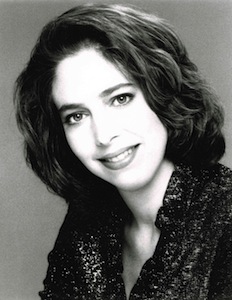 Tina Faigen, pianist, holds a Bachelor of Music degree from Oberlin College, and Master of Music and Doctor of Musical Arts degrees from University of Miami where she studied under renowned pianist Ivan Davis. Faigen is a recording artist, appears in solo recitals and chamber music concerts, and performs as guest soloist with orchestras. A recipient of many prizes and awards, she has performed on the distinguished Pittsburgh “Y” Recital Series, is a 1989 winner of the Pittsburgh Concert Society Majors, and has been engaged as guest pianist with numerous orchestras including the Pittsburgh Symphony Orchestra at the age of 13, and having been awarded a debut tour, with Orchestra Sinfonica Abruzzeze in Italy.
Appearing in over 30 performances of Tchaikovsky’s 3rd Piano Concerto with Edward Villella’s Miami City Ballet, the Miami Herald writes, “Tina Faigen played so brilliantly that it was difficult at times to concentrate on the dancing.” Music critics have described her as “commanding a rich palette of pianistic colors and fingers of awesome dexterity,” and as having “a compelling combination of solid technique and distinctive interpretation, full of color and nuance, with her virtuosity the servant of the music. A stunning performer who plays with assurance, fluidity and power.”
Faigen’s recordings of Robert Schultz’s works Visions of Dunbar and Tina Faigen Plays Piano Transcriptions have received rave reviews. “Faigen plays Schultz’s works superlatively, effortlessly clarifying their rippling complexities and performing with supple dexterity, a clear, resonant tone and sensitive touch.” Faigen is co-author of the acclaimed Accelerando Piano Technique Series, along with numerous other editions of educational piano music. Since 1992 she has served as the principal editor for The Robert Schultz Piano Library.
Since her recent relocation to Pittsburgh, Faigen has performed on the Steinway Recital Series, the Chatham Guest Artist Series, the Pittsburgh Concert Society 70th Anniversary Gala, was featured artist on the Carnegie Mellon University special event concert, “Schultz, Faigen & Friends,” and has performed live on WQED-FM. Faigen has maintained an active teaching studio since the age of 14, is on the piano faculty at University of Pittsburgh, and is a faculty member of the Music Preparatory School at Carnegie Mellon University. Also a violinist, Faigen serves as Principal 2nd in the Edgewood Symphony Orchestra.
For more information or to contact Tina directly, visit her website https://tinafaigen.com.
Keeping in touch
We welcome communication, and since the site is recently renovated, you may be among the first to see this version in action. As such, we would love to hear from you regarding your experience, so send us an email at schultzmusic@schultzmusic.com with any comments, questions, or issues you may experience. You may also address communication directly to Robert Schultz. Dialogue with artists, professionals, teachers, and students has contributed greatly to the development of the Robert Schultz Catalog, Piano Library, and Schultz Music Publications, and this site is devoted to that on-going effort.
Biographies & program notes
We have program notes for all of the major concert works on file, and are happy to share them. The same goes for biographies and photos–there are a number of different versions and sizes, so let us know what you need and we will be happy to send it. We would like to receive a copy of your concert program for our records, either a hard copy or digital. For a detailed biography and comprehensive catalog of Robert Schultz’s original works you may also wish to view the Robert Schultz entry on the Pytheas Center for Contemporary Music website: http://www.pytheasmusic.org/schultz_robert.html
A few words about ASCAP
Robert Schultz is a writer member of ASCAP and Schultz Music Publications is an ASCAP publishing company. The performance rights for all of Robert Schultz’s original works are licensed by ASCAP. The Robert Schultz catalog is listed in the ACE / Repertory database on www.ascap.com. Search Writer: Robert Melvin Schultz. Contact us if you need information about this or have questions. We greatly appreciate being informed of performances of Robert Schultz’s original works, especially college and professional recital and concert performances which may not otherwise be credited. Please send a scan of the program attached or pasted in email to schultzmusic@schultzmusic.com.
Policies & Terms
Visitors and users of schultzmusic.com are encouraged to read and must be in agreement with the policies and terms specified in our Privacy Policy and Purchasing Policy.
Progress Report
Since August, 2013, schultzmusic.com has been undergoing a major renovation and has now evolved to become a modern e-commerce outlet for Schultz Music Publications. Video and audio samples are now provided for most of the original works, combined with sample music pages, cover images and important details. All of Robert Schultz’s published print editions that are currently available are included on the site, plus the Out of print area of the catalog offers a wide range of Schultz editions that are no longer available from the original publisher. Of particular note is the addition of self-print digital files which are now available in the Digital Library and Choral catalog. While certain items in the Robert Schultz catalog are still being added, most product areas are now complete. Following are details about the present status of the different areas of the website.
All of the Print Editions in the extensive Robert Schultz Piano Library have been included–the Accelerando Piano Technique Series, all other published editions for students, amateurs and professionals, and the complete Robert Schultz original works for piano. In addition to those works released through Schultz Music Publications, you will find Schultz piano editions published by Alfred, Columbia Pictures, CPP/Belwin, FJH, and Warner Bros.
The Vocal category is complete, including works for Solo Voice and Choral works. Additionally, works in the Choral catalog are now available in three different formats–standard print edition and digital editions in two sizes.
The Out of print category is complete, and includes all those Robert Schultz editions that we have in stock that are no longer available from the original publisher. Typically these are hard to find editions, and our stock, which is displayed on each product’s description page, is limited. The Out of print table is searchable and sortable by users so you can quickly locate an edition by its title or catalog number.
The Instrumental catalog which includes Chamber Music and works for Orchestra is not yet complete, presently listing the more recent original works. We expect to complete this portion of the catalog very soon, however, and will make it known when that happens. In the mean time, if you have any questions about the Instrumental catalog or are searching for chamber music or orchestral works, please send email to schultzmusic@schultzmusic.com and we will send you the details. Know that all of the works in these areas of the catalog are available, they have just not been listed yet.
The Recordings area of the site includes two segments of the catalog–Compact Discs and Listening Library. Find Tina Faigen’s acclaimed recordings of Schultz’s original works and transcriptions for piano in Compact Discs. The Listening Library provides users with free access to the complete collection of the website’s playable recordings and music demos–representative video and audio recordings of Schultz works and editions. Watch for new additions to this area including live performances and studio recordings of orchestras, choirs, ensembles and soloists, both professionals and students, performing music by Robert Schultz. If you would like to submit your recording of a Robert Schultz work to be considered for our Listening Library send us an email (schultzmusic@schultzmusic.com) with the details and we’ll let you know how to submit it.
The most significant area still under construction is the Digital Library. The Digital Library is a body of single piano editions made available for purchase and download in self-print PDF files, commonly referred to as printable sheet music editions. Our ultimate goal for this segment of the catalog is to make available the vast majority of Robert Schultz’s 3,000 piano arrangements, transcriptions and editions of classical works written since 1980. As we have this complete catalog of arrangements on file in print editions, we are working to convert these to electronic editions and take the necessary steps to make them available. As of August 18, 2021, 561 titles have been added to the Digital Library. The most recent additions are the bulk of the original advanced/concert piano solos such as Visions of Dunbar, Eight Reminiscences and numerous others. Prior to the addition of the piano works for concert artists, the intermediate and early grade piano solos that were first published by Columbia Pictures Publications in Schultz’s Future Artists Series during the 1980s were added. The entire series of 24 Classical Transcriptions are now available from the Digital Library as well as in various print editions. A wide variety of jazz and popular piano arrangements, both solos and duets, are now included, with the initial emphasis on the upper level arrangements for professionals and intermediate to advanced pianists. The bulk of the Christmas catalog is now available, including all of the intermediate-professional solo and duet arrangements. In addition to the individual piano editions, recent releases include several complete editions from the Plus 12 Series and a series of collected arrangements titled 5 Packs. We will continue to add titles as digital rights are acquired and will post announcements about new additions on the Digital Library page, on the Home Page in the area of New Releases, as well as updating this page. Detailed information about searching, purchasing and working with the files in the Digital Library is available on the Digital Library page.